

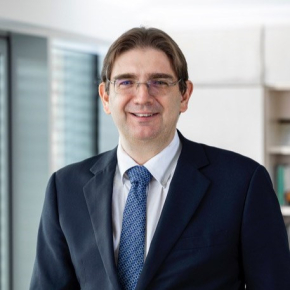
CNRS Chemistry welcomes Paolo Carloni as the Ambassador in Chemical Sciences
On December 10, 2024, Paolo Carloni, Professor of Computational Biophysics at the University of Aachen (Germany) and Director of the Institute for Computational Biomedicine at Forschungszentrum Jülich (Germany) will start a series of lectures in several French CNRS laboratories as the Ambassador in Chemical Sciences in France
Biomolecular simulations are very popular methods in the scientific community to solve problems of biological and even pharmacological relevance. What are the reasons for this, and what makes your research a pioneer in the field?
In cells, biomolecules rarely act alone. Rather, they interact with each other in very specific ways to carry out their functions, forming short-range interactions with each other. Drugs work by interfering with these molecular recognition processes, so their chemical details are critical to their beneficial effects.
Molecular dynamics (MD) simulations, by using statistical mechanics methods, can predict the dynamics, energetics, and even kinetics of these biological processes at the molecular level. The basic principle of MD is very simple: you use Netwon's second law
I was lucky enough to start my Ph.D. (early 90's) when the first methods to perform rigorous simulations at room temperature and pressure had just been established. And I was also very fortunate to have as advisor Prof. Michele Parrinello, who has made many seminal contributions to MD.
At that time, I pioneered MD simulations based on first-principles quantum mechanics, which sometimes led to conclusions quite different from those of force-field-based MD. These simulations are computationally expensive but they can be embedded in a hybrid quantum mechanical/molecular mechanics scheme (developed by Warshel and Levitt) which allows to consider the whole biological system (e.g. a protein or a protein/DNA complex) and not only a fragment. This approach is particularly suitable for large parallel computers like the ones we have in our campus in Jülich.
During my PhD, I also predicted for the first time the structural dynamics of proteins containing multinuclear transition metal ions: these were particularly challenging because the stereochemistry at the metal sites was dictated by the electronic structure. I also started very early to perform multiscale simulations, where atomistic MD simulations were performed together with simulations based on simplified models: this approach could extend the results from a single system to whole classes of proteins.
What progress can we expect in this area over the next few years?
Using MD, scientists nowdays understand the driving forces behind many of the processes that are driven by large assembled structures, such as the nuclear pore complex and the ribosome. The advent of incredibly powerful computers (such as the exascale machines, one of which will be coming to Jülich in the next few months), combined with the power of AI approaches, is dramatically expanding the scope of MD by modeling biomolecular motions over unprecedented length and time scales. This might revolutionize our understanding of fundamental biological processes, with applications that include drug discovery and biotechnology.
As Ambassador for Chemical Sciences in France, do you have any particular expectations of this upcoming tour?
France is very strong in fields like computational chemistry and biophysics. I hope that this visit may lead to many fruitful interactions and collaborations.
Editor: CCdM
Lectures tour
10/12/2024 - Paris - Laboratoire de Biochimie Théorique (Marc Baaden)
11/12/2024 - Nancy - Laboratoire de Physique et Chimie Théoriques (Dragi Karevski)
12/12/2024 - Strasbourg - Institut de chimie (Marco Cecchini)
13/12/2024 - Marseille - Bioénergétique et ingénierie des protéines (Anabella Ivancich)